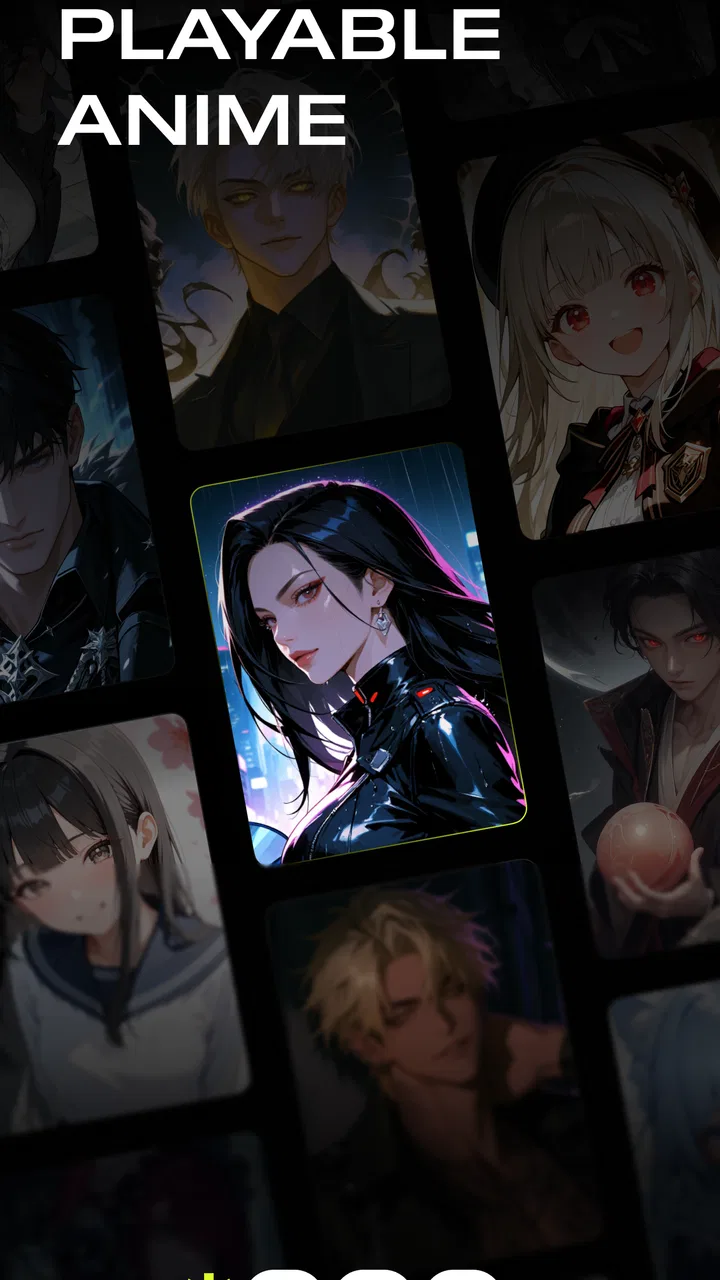
OOC: The Playable Anime
- 4.3
- Rating
- 1.00M
- Installs
- Free
- Price

 Analysis by App-foxy
I approached OOC: The Playable Anime as a reading app rather than a conventional game. Its appeal is the idea of an anime-style novel that reacts to the reader’s imagination, but the real test is whether that idea feels comfortable in everyday use. My experience is that it is most interesting when I treat it as an interactive fiction session: I give it attention, make choices thoughtfully, and accept that the experience may feel less like watching a finished episode and more like helping shape one.
That distinction matters before you install it. If you want a fixed story with polished scenes and no uncertainty, a standard manga reader, visual novel, or streaming service may suit you better. If you enjoy reading, experimenting with possibilities, and seeing where an imaginative format leads, this Books & Reference app has a more unusual reason to exist. It is free to start, carries a Teen content rating, and comes from OOC, so it is easy to try without treating the first session as a major commitment.
Getting past the first-session friction
I’d make the first session a small, deliberate test rather than trying to judge the whole experience at once. Settle on one story moment, read the setup carefully, and notice whether making a choice feels engaging or interrupts the flow for you. That gives you a useful sense of fit before you explore further, and makes it easier to decide what kind of reading session suits the app.
You May Also Like

 Blood Strike: 2.5 Anniversary
Blood Strike’s Loadouts Turn Every Drop Into a Tactical Gamble
A close look at Blood Strike’s custom loadouts: how fast access to signature weapons reshapes its battle royale rhythm, rewards preparation, and narrows the gap between fights.

 Pandora - Music & Podcasts
Pandora’s Music Is Easy to Start, but Harder to Recover
Pandora’s strength is its low-effort path from a seed to a station. Its weak spot is how much confidence it asks you to place in connection, setup, and quiet recovery.

 8 Ball Pool
 Is Built on Rivalries, Rematches, and Routine
A close look at the rivalries, rematches, shared routines, and unanswered safety questions that turn a quick pool match into a persistent mobile community.

 Samsung Music
’s Quiet Strength Is Playing What You Already Own
Its reach comes less from spectacle than from dependable access to a personal library. That simplicity is both the app’s strongest retention engine and its ceiling.

 AccuWeather: Weather Radar
AccuWeather Review: A Quick, Clear Forecast for Everyday Decisions
For everyday plans, the best forecast is the one you can understand quickly. AccuWeather makes rain timing, radar, and local conditions easy to act on, with a few trade-offs.

 Hill Climb Racing
Why Hill Climb Racing Still Turns Crashes Into One More Run
A tiny car, a bumpy hill and one more upgrade: Hill Climb Racing keeps resurfacing because its simple chaos makes every near-miss feel personal.
More From Our News Desk



Where users are most likely to get stuck
The first obstacle is not necessarily technical. It is understanding what kind of interaction the app expects from you. The phrase “playable anime” can create the expectation of an animated game with familiar controls, while the reading-focused nature of the product points in another direction. I found it more useful to approach the opening as a guided story experiment. That mindset prevents disappointment when the experience does not behave like a full action title.
A second source of friction is the pace. Interactive fiction asks the reader to pause, interpret a situation, and decide what to do next. Anyone opening it while distracted may feel that the app is slow or unclear, even when the problem is simply divided attention. I get more from it when I read in a quiet place and allow enough time to follow the story instead of tapping through as quickly as possible.
There is also a practical question about expectations around progress. In a normal book, the next page is predictable. In an interactive novel, the reader’s input becomes part of the rhythm, so an apparently small decision can change how the session feels. I recommend treating early choices as exploration rather than trying to discover a perfect route immediately. That makes the format less stressful and gives the app room to show what it is trying to do.
Because the title is still relatively early in its life, some rough edges are easier to notice than they would be in a mature reading platform. The current version is 0.1.17, which helps explain why a user may encounter moments that feel more experimental than fully polished. That is not automatically a reason to avoid it, but it does change the bargain: you are trying an evolving experience, not buying access to a completely settled one.
Simple setup checks before blaming the story
On Android, the app supports devices running Android 7.0 or later. Before investigating anything complicated, I would check the operating system and make sure the device has enough free space for a comfortable installation and update. A phone that is technically compatible can still behave poorly when storage is nearly full or when several demanding apps are competing for memory.
I also recommend opening the app on a stable connection during the first launch. Even when a reading experience eventually feels self-contained, the initial setup may need to prepare content or confirm the latest version. If the screen appears to pause, I first wait a little, check the connection, and reopen the app once rather than repeatedly tapping buttons. Repeated taps can make a slow start look like a deeper failure.
Another useful check is the device’s battery and background activity. A phone in power-saving mode, with many apps suspended or aggressively restricted, can produce inconsistent loading behavior. I would temporarily close unnecessary applications, connect to a reliable network, and then try again. These are ordinary steps, but they matter more for a story app because a small loading interruption can break concentration and make the narrative feel confusing.
When the app opens but text or scenes do not appear correctly, I would first leave the current screen and return to it, then restart the application if needed. I would avoid clearing app data as a first response, because that can remove local progress or preferences. A restart is reversible; wiping data is not. If the problem continues, checking for an available update is the safer next move.
The free price makes this initial testing relatively low-risk, but free does not mean every part of the experience is unlimited. In-app purchases range from $1.39 to $142.99 per item. I would review purchase controls before handing the phone to a younger reader, especially because the Teen rating makes the intended audience broader than adults alone. The rating is a useful guide to suitability, not a replacement for checking whether the themes match your own standards.
A recovery workflow that protects your progress
My preferred recovery routine is deliberately conservative. If a chapter or interaction seems stuck, I stop tapping, note what I was doing, and restart the app. If the issue returns at the same point, I check the connection and version before changing anything else. This approach helps separate a one-off loading hiccup from a repeatable problem without immediately sacrificing progress.
I would also avoid jumping between several devices while trying to diagnose a problem. Unless you already know how the app handles progress across devices, switching hardware can make it difficult to tell whether the issue comes from the original phone, the connection, or the session itself. For a short interactive reading experience, staying on one device until the current problem is understood is usually the clearest workflow.
When a choice does not seem to produce the response I expected, I do not assume that the app has failed. Interactive writing can use context, timing, or a particular interpretation of the prompt. I reread the preceding passage, make a deliberate choice, and give the app a moment to respond. This is one of the non-obvious adjustments that improved my experience: slowing down is not merely a reading preference; it can make the interaction easier to understand.
I also suggest keeping notes outside the app if you are exploring different possibilities. A short record of the situation, your choice, and the result gives you a way to compare sessions without repeatedly guessing. This is especially useful for readers who want to understand how much their imagination influences the experience. It turns casual play into a small experiment and helps reveal whether you enjoy the app’s central idea.
If you decide that the format is not for you, uninstalling and reinstalling should be treated as a last resort rather than a standard fix. It may clear locally stored information, and the benefit is uncertain unless the issue is clearly tied to damaged local files. I would protect any progress that matters, confirm that the problem is persistent, and only then consider more drastic troubleshooting.
When the app may not be the cause
Not every awkward session points to a defect in OOC: The Playable Anime. A small screen, unusual display scaling, or a device with an older processor can make text-heavy interaction feel less comfortable even when the app is operating normally. If reading feels cramped, rotating the device or adjusting the system’s display settings may help, provided the app responds well to that layout.
Network conditions can create another false diagnosis. A weak signal may delay content, interrupt a transition, or leave the reader unsure whether a choice was accepted. I try the same action on a stronger connection before deciding that the story logic is broken. If the behavior changes with the network, the connection is part of the explanation.
Notifications and background interruptions are easy to overlook. A message, call, or battery warning arriving during an important passage can make the next screen feel disconnected. For a focused session, I use a quiet period and close overlays that might cover the reading area. This is particularly worthwhile here because the app’s value depends on attention and imagination rather than quick reflexes.
Expectations can also be the culprit. Someone looking for a conventional anime game may judge the app harshly because it does not provide the same kind of movement, combat, or visual spectacle. Someone looking for a novel with no participation may instead find the interactive element distracting. Neither reaction proves that the app is malfunctioning. It shows that the product sits between familiar categories, and that middle ground will not suit every reader.
The audience question deserves equal care. The Teen rating means parents and guardians should make their own decision based on the reader’s maturity and the themes encountered. I would not present it as a universal children’s reading app simply because it is free or story-based. Conversely, adults who want a demanding literary novel may find the anime framing too light or too guided. The best fit is a reader who is comfortable with imaginative, participatory storytelling.
How it compares with ordinary reading alternatives
A standard ebook app is better when your priority is a large personal library, predictable page turning, adjustable reading habits, and minimal interaction. Those apps usually let you focus entirely on the author’s finished text. This title offers a different trade-off: less certainty and potentially more personal involvement. I would choose the ordinary ebook route for commuting, studying, or reading long chapters in short intervals, while I would choose this app when I want the reading session itself to feel more exploratory.
Manga readers are also a clearer choice for people who mainly want panels, visual composition, and established characters presented in a fixed sequence. The anime-inspired identity here may attract the same audience, but the interactive novel format asks for more imagination from the reader. That can be a strength when you enjoy filling in gaps, yet it can feel like a weakness if you expect every important moment to be shown.
Visual novels occupy the closest neighboring space. They often provide structured choices and a more familiar game-like presentation. OOC is more appealing to me when I want the act of reading to remain central rather than treating text as a bridge between other game systems. The trade-off is that readers seeking elaborate routes, extensive menus, or a long-form game framework may prefer a dedicated visual novel instead.
Streaming anime wins whenever the goal is effortless viewing. You sit back and receive a directed performance. This app asks you to participate mentally, so it is less suitable for a tired evening when you want something passive. Its advantage appears when you want to feel involved in the direction of the experience, even if that involvement requires more patience than pressing play.
Who will get the most from it
I can see this working well for a reader who likes anime aesthetics but is also curious about interactive fiction. It is particularly suitable for someone who enjoys revisiting a scene, considering alternatives, and treating a story as a conversation with their own imagination. The free entry point makes experimentation easy, while the Teen rating gives families a clear reminder to consider suitability rather than assuming the content is aimed at all ages.
A realistic everyday use case would be a short evening session after work or school. Instead of opening a social feed and losing track of time, I would set aside a quiet block, read until a meaningful decision, and stop at a natural point. Keeping the session intentional helps preserve the story’s atmosphere. It also avoids the frustration of trying to follow an imaginative narrative while multitasking.
I would skip it if you need a dependable offline reference tool, a conventional ebook library, or a fully passive anime experience. I would also hesitate if you dislike unfinished-feeling products, because the early version number suggests an experience that may continue to change. Readers who are sensitive to in-app spending should set purchase protections before exploring, since optional items can cost substantially more than the free starting point suggests.
Its public reach is already meaningful, with over a million installs, an average rating of 4.3, around nineteen thousand ratings, and roughly three thousand reviews. Those figures indicate that the concept has found an audience, but they should not replace a personal fit check. A popular interactive story can still be wrong for someone who wants fixed pages, mature literary depth, or a polished game with established mechanics.
My practical verdict after using it
OOC: The Playable Anime is worth trying if you understand that its main attraction is the meeting point between reading and participation. I like the fact that it asks me to bring imagination to the session instead of simply consuming a finished show. The strongest moments come when I slow down, reread a situation, and make choices for narrative reasons rather than tapping randomly.
My recommendation comes with clear conditions. Install it on a compatible Android device, begin with a stable connection, give the opening your full attention, and avoid destructive troubleshooting until you know a problem is repeatable. If a screen stalls, restart calmly and check the basics before assuming the story is broken. If the interaction feels wrong, compare it with an ebook, manga reader, visual novel, or streaming service; the alternative may simply match your preferred kind of attention better.
For me, the app’s biggest trade-off is also its identity. It is less predictable than a normal book and less immediately demonstrative than anime on a screen, but that space allows the reader to participate. The current version and purchase range mean I would approach it with sensible expectations and spending controls. Even so, as a free Books & Reference app from OOC, it offers a distinctive experiment for readers who want anime-inspired storytelling to respond to their imagination. Try it when you want to read actively, not when you want to watch passively.
FAQs for OOC: The Playable Anime
01What is OOC: The Playable Anime?
OOC: The Playable Anime is an interactive mobile experience that combines anime-style storytelling with playable scenes and game-like interactions. Rather than simply watching a fixed video, you participate in the story through choices, actions, and progression. The exact content can vary by version, so checking the current store description, supported devices, and available episodes before downloading is recommended.
02How does the gameplay work in OOC: The Playable Anime?
The app is designed around a mixture of animated narrative sequences and interactive gameplay. Depending on the chapter or scene, you may need to make decisions, follow prompts, explore content, or complete simple challenges that influence how the experience unfolds. It is best suited to users who enjoy anime presentation but also want more involvement than a traditional show provides.
03Is OOC: The Playable Anime free to download and play?
OOC: The Playable Anime may be available as a free download, but access to all content can depend on the developer’s monetization model. Some features, episodes, items, or optional purchases may require payment, and advertisements may also be included. Before installing, review the official Google Play or App Store listing for current pricing, in-app purchase details, subscription terms, and age-related purchase controls.
04What devices are compatible with OOC: The Playable Anime?
Compatibility depends on the version released for Android or iOS, as well as your device’s operating system, storage, and hardware capabilities. Because animated content can require additional space and performance, older phones or tablets may experience longer loading times, reduced visual quality, or crashes. Confirm the minimum operating-system requirement and available storage on the official store page before downloading.
05Does OOC: The Playable Anime require an internet connection?
An internet connection may be needed for the initial download, account features, updates, advertisements, cloud saving, or access to new story content. Some portions might work offline after installation, but offline availability should not be assumed unless the developer clearly confirms it. If you plan to play while traveling, test the app beforehand and download any required episodes or resources while connected to Wi-Fi.
Pros
- Stylish anime-inspired visuals with expressive character designs.
- Playable characters offer distinct abilities and combat approaches.
- Fast-paced battles keep short play sessions engaging.
- Frequent rewards encourage regular daily play.
- Story presentation adds context beyond the combat missions.
Cons
- Progress can become grind-heavy when upgrading several characters.
- Some content may favor players who spend on premium resources.
- Combat effects can make busy encounters difficult to read.
- The interface may feel crowded on smaller phone screens.
- A stable internet connection is required for most features.

OOC: The Playable Anime
Gallery